The Complete Homeowner’s Guide to Foundation Crack Repair: Causes, Signs, and Solutions
- Tru Integrity LLC
- Jun 12
- 5 min read

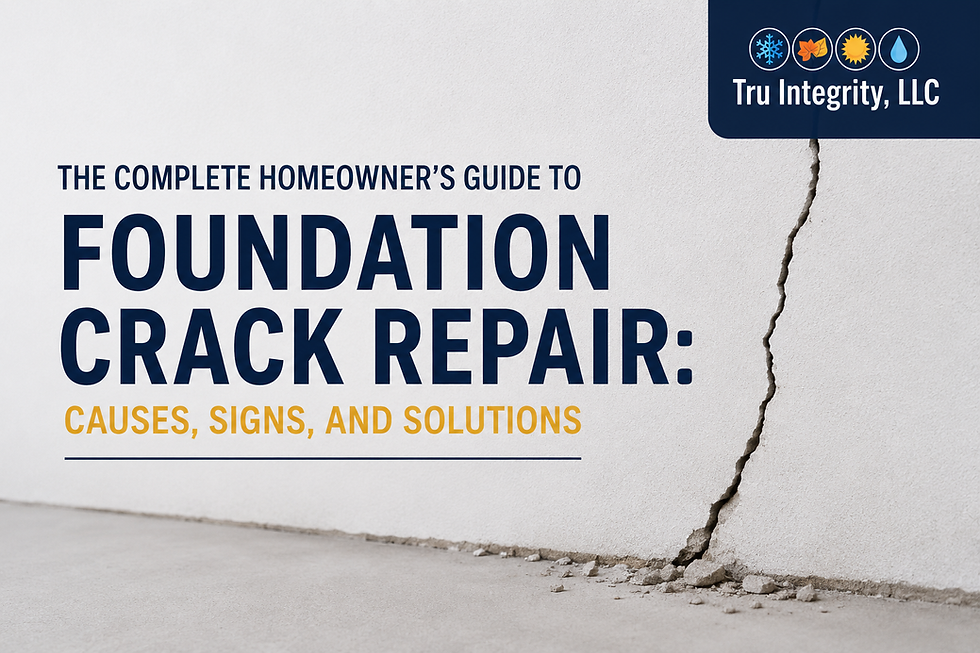
Your home's foundation is one of its most important structural components. It supports the entire building and helps maintain its stability for years to come. However, foundation cracks can develop over time due to various environmental and structural factors. While some cracks may appear harmless, others can indicate serious underlying issues that require immediate attention.
Understanding the causes, warning signs, and repair options can help homeowners make informed decisions and protect their property from costly damage. This guide covers everything you need to know about foundation crack repair, including prevention strategies and the role of moisture control in maintaining a strong foundation.
What Is Foundation Crack Repair?
Foundation crack repair is the process of identifying, evaluating, and fixing cracks that develop in a home's foundation. These cracks can occur in concrete slabs, basement walls, crawl spaces, and foundation footings.
The primary goal of repairing foundation cracks is to restore structural integrity, prevent water intrusion, and stop minor issues from developing into major structural problems. Depending on the severity and cause of the crack, repair methods may range from simple sealing techniques to more advanced structural reinforcement solutions.
Common Causes of Foundation Cracks
Foundation cracks can develop for several reasons. Understanding the root cause is essential for selecting the most effective repair method.
1. Soil Movement
The soil beneath your home constantly expands and contracts due to moisture changes. During wet conditions, soil absorbs water and expands. During dry periods, it shrinks and creates gaps beneath the foundation.
This continuous movement places stress on the foundation and can eventually lead to cracking.
2. Poor Drainage
Improper drainage around the property allows water to accumulate near the foundation. Excess moisture can weaken the supporting soil and increase hydrostatic pressure against foundation walls.
Over time, this pressure may cause cracks, bowing walls, and settlement issues.
3. Foundation Settlement
Settlement occurs when the soil beneath the foundation shifts or compresses unevenly. As parts of the foundation sink at different rates, cracks may develop throughout the structure.
Settlement-related cracks often require professional evaluation to prevent further damage.
4. Tree Roots
Large tree roots can absorb significant amounts of moisture from the surrounding soil. This can lead to uneven soil shrinkage and movement beneath the foundation, contributing to crack formation.
5. Construction Issues
In some cases, foundation cracks result from poor construction practices, inadequate soil preparation, improper concrete curing, or insufficient reinforcement during the building process.
Types of Foundation Cracks
Not all foundation cracks are the same. Understanding the type of crack can help determine its severity.
Vertical Cracks
Vertical cracks are among the most common foundation cracks. They often occur due to normal settling and may not always indicate serious structural problems.
However, they should still be monitored and inspected to prevent water infiltration.
Horizontal Cracks
Horizontal cracks are typically more serious. They often result from excessive soil pressure against basement walls and can indicate structural instability.
Professional inspection is highly recommended when horizontal cracks appear.
Diagonal Cracks
Diagonal cracks usually develop when a foundation settles unevenly. These cracks may widen over time and require corrective action to prevent further movement.
Stair-Step Cracks
Frequently found in brick or block foundations, stair-step cracks often indicate foundation settlement or shifting. These cracks should be evaluated to determine the extent of structural movement.
Warning Signs That You Need Foundation Crack Repair

Foundation problems rarely appear overnight. Homeowners should watch for these common warning signs:
Visible cracks in foundation walls
Cracks in interior drywall
Uneven or sloping floors
Doors and windows that stick or won't close properly
Gaps around window frames
Water seepage in the basement
Bowing or leaning walls
Separation between walls and ceilings
Exterior brick cracking
Addressing these warning signs early can significantly reduce repair costs and prevent extensive structural damage.
Why Foundation Cracks Should Never Be Ignored
Many homeowners assume small cracks are merely cosmetic. Unfortunately, even minor cracks can allow water to enter the structure and worsen over time.
Ignoring foundation issues can lead to:
Structural instability
Increased repair costs
Basement flooding
Mold and mildew growth
Reduced property value
Pest infestations
Poor indoor air quality
Prompt action can help protect both your investment and your family's safety.
Professional Foundation Crack Repair Solutions
The appropriate repair method depends on the cause, location, and severity of the crack.
Epoxy Injection
Epoxy injection is commonly used for non-moving structural cracks. The epoxy fills the crack and restores the strength of the concrete.
This method is effective for many residential foundation repairs when structural movement is no longer occurring.
Polyurethane Foam Injection
Polyurethane injection is often used when water intrusion is present. The material expands within the crack, creating a waterproof seal that helps prevent future leaks.
Carbon Fiber Reinforcement
For walls experiencing pressure and movement, carbon fiber strips can provide additional support and stabilization.
This solution is frequently used for basement walls showing signs of bowing or cracking.
Wall Anchors and Bracing Systems
Severe wall movement may require wall anchors or bracing systems to stabilize the structure and prevent further damage.
Foundation Piering
When foundation settlement is the underlying cause, piering systems can transfer the weight of the structure to more stable soil layers.
This method helps restore foundation stability and reduce future movement.
The Role of Basement Waterproofing
Water is one of the leading causes of foundation damage. This is why basement waterproofing plays a critical role in protecting your home's foundation.
Water entering through cracks can increase moisture levels, weaken structural materials, and contribute to mold growth. Waterproofing solutions help keep water away from the foundation and reduce hydrostatic pressure.
Effective waterproofing strategies include:
Interior drainage systems
Exterior waterproof membranes
Sump pump installation
Drain tile systems
Foundation sealing
Gutter and downspout improvements
Combining foundation repairs with basement waterproofing services often provides the best long-term protection against future damage.
How to Prevent Future Foundation Cracks

While not all foundation problems can be prevented, homeowners can take several steps to minimize risk.
Maintain Proper Drainage
Ensure gutters and downspouts direct water away from the foundation. Standing water should never be allowed to accumulate near your home.
Monitor Soil Moisture
Maintain consistent soil moisture levels around the foundation, especially during prolonged dry periods.
Inspect Your Foundation Regularly
Routine inspections can help identify small cracks before they become major structural concerns.
Address Plumbing Leaks Promptly
Undetected plumbing leaks can saturate the soil beneath your home and contribute to settlement issues.
Invest in Waterproofing Solutions
Professional waterproofing measures can significantly reduce moisture-related foundation damage.
Why Homeowners Trust Tru Integrity LLC
When foundation issues arise, working with experienced professionals is essential. Tru Integrity LLC provides reliable foundation assessment and repair solutions designed to protect residential properties from structural damage.
Their team understands the complexities of foundation movement, water intrusion, and soil-related challenges. By identifying the root cause of foundation problems, they develop customized solutions that address both immediate concerns and long-term stability.
In addition to foundation repair, Tru Integrity LLC offers moisture management and waterproofing solutions that help homeowners maintain a safer and healthier living environment.
Protect Your Home Before Minor Cracks Become Major Problems
Foundation cracks should never be ignored. What starts as a small cosmetic issue can eventually lead to significant structural damage, water intrusion, and costly repairs.
If you've noticed signs of foundation damage or moisture issues in your basement, contact Tru Integrity LLC today for a professional evaluation and effective repair solutions tailored to your home's needs. Contact us today to schedule an inspection and take the first step toward protecting your home's foundation, safety, and long term value.


Comments